
Introduction
A domain name is one of the most important elements of any website. It acts as your online address and is often the first thing visitors notice about your brand. Whether you’re creating a personal blog, an online store, a business website, or a portfolio, choosing the right domain name can have a significant impact on your online success.
A memorable, easy-to-spell domain name helps users find your website quickly and builds trust with your audience. It also supports branding, marketing, and search engine optimization (SEO). Since millions of domain names are already registered, selecting the perfect one requires careful planning.
This guide covers the best domain name tips, common mistakes to avoid, and strategies for choosing a domain that supports long-term growth.
What Is a Domain Name?
A domain name is the unique web address people type into their browser to visit a website. Instead of remembering a complicated IP address, users can simply enter a readable name.
For example:
- google.com
- amazon.com
- wikipedia.org
A domain name consists of two main parts:
- Name: Your chosen website name (e.g., “techworld”)
- Extension: The ending, such as .com, .net, or .org
Together, they form a complete web address.
Why Choosing the Right Domain Name Matters
Your domain name influences several aspects of your website.
Benefits include:
- Builds brand recognition
- Improves credibility
- Makes your website easier to remember
- Supports digital marketing
- Helps users find your business
- Creates a professional online identity
- Can contribute to SEO when relevant
A good domain name becomes a valuable business asset over time.
Keep It Short and Simple
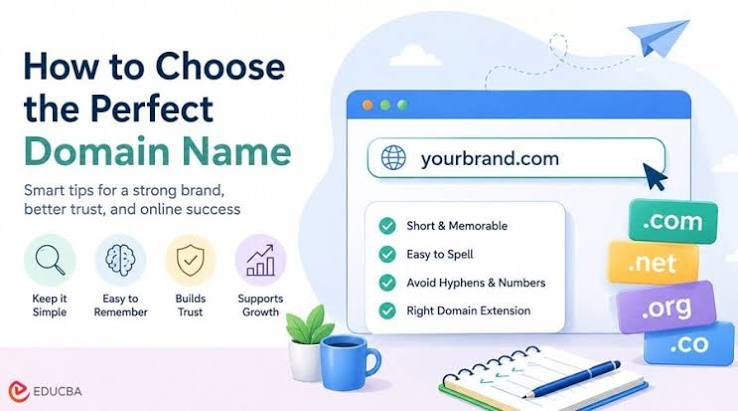
One of the best domain name tips is to keep it short.
Short domain names are:
- Easier to remember
- Faster to type
- Less likely to be misspelled
- Better for branding
Aim for a domain name with around 6–15 characters if possible.
For example:
- BrightTech.com
- PixelHub.com
- SmartDeals.com
Avoid unnecessarily long names that are difficult to recall.
Make It Easy to Spell
People should be able to hear your domain name once and type it correctly.
Avoid:
- Difficult words
- Complex spellings
- Unusual abbreviations
For example, “QuickCars.com” is much easier to remember than “KwikKarzOnline.com.”
Simple spelling improves user experience and reduces typing errors.
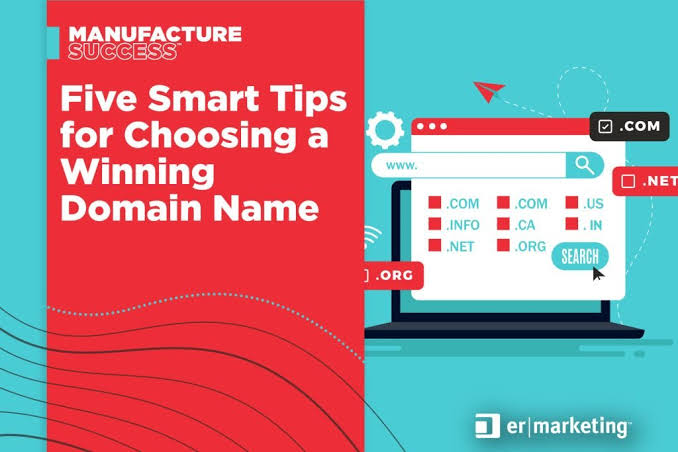
Choose the Right Domain Extension
The extension, also known as the Top-Level Domain (TLD), is an important part of your web address.
Popular extensions include:
.com
The most trusted and widely recognized extension.
Best for:
- Businesses
- Blogs
- Online stores
- Personal websites
.net
Often used by technology companies and online services.
.org
Suitable for:
- Non-profit organizations
- Educational groups
- Community projects
Country-Specific Extensions
Examples include:
- .uk
- .ca
- .au
- .pk
These are ideal if your audience is primarily located in one country.
Include Relevant Keywords
Adding a relevant keyword can improve your branding and help users understand your website’s purpose.
Examples:
- HealthyRecipes.com
- BestTravelTips.com
- DigitalMarketingHub.com
However, avoid stuffing multiple keywords into your domain.
A natural and brandable name is usually more effective.
Think About Your Brand
Your domain name should reflect your brand identity.
Ask yourself:
- Is it memorable?
- Is it unique?
- Does it match my business?
- Will it still work in five years?
A strong brand name is often more valuable than a keyword-heavy domain.
Avoid Numbers and Hyphens
Numbers and hyphens often confuse users.
For example:
Best-Deals-4You.com
People may not know whether to type:
- Four
- 4
- Hyphen or no hyphen
Instead, choose:
BestDealsOnline.com
Cleaner domain names are easier to remember and share.
Make It Future-Proof
Choose a name that allows your business to grow.
For example, if you sell laptops today but plan to expand into other electronics later, a name like:
LaptopOnlyStore.com
may become limiting.
Instead, something broader like:
TechWorld.com
offers greater flexibility.
Research Before Registering
Before purchasing a domain name:
- Search online
- Check for trademark conflicts
- Look at competitors
- Verify social media username availability
Consistency across your website and social media accounts strengthens your brand.
Choose a Reliable Domain Registrar
Buy your domain from a trusted registrar.
Popular registrars include:
- GoDaddy
- Namecheap
- Google Domains (where available)
- Porkbun
- Dynadot
Compare pricing, renewal fees, customer support, and security features before making a decision.
Protect Your Privacy
Most registrars offer WHOIS privacy protection.
Benefits include:
- Hides personal information
- Reduces spam emails
- Protects your identity
- Improves security
This feature is highly recommended for individual website owners.
Register Similar Domains
If possible, register:
- .com
- .net
- .org
- Country-specific extensions
This helps:
- Protect your brand
- Prevent competitors from using similar names
- Reduce customer confusion
Although it requires additional investment, it can be worthwhile for growing businesses.
Check Domain Availability Quickly
Before finalizing your idea:
- Search multiple domain variations.
- Try different word combinations.
- Consider adding a simple brand word if your first choice is unavailable.
Avoid using names that are too similar to established brands, as this can create legal issues and confuse visitors.
Consider SEO Carefully
A domain name alone will not guarantee high Google rankings.
Instead, focus on:
- High-quality content
- Fast website speed
- Mobile-friendly design
- Strong backlinks
- Excellent user experience
While relevant keywords can help users understand your niche, overall SEO depends on many factors.
Common Mistakes to Avoid
Many beginners make avoidable mistakes when choosing a domain.
These include:
- Choosing very long names
- Using difficult spellings
- Adding multiple hyphens
- Using random numbers
- Copying popular brands
- Ignoring trademark issues
- Forgetting renewal costs
- Selecting trendy names that may become outdated
Avoiding these mistakes can save time and money in the future.
Domain Name Ideas for Different Websites
Business Website
- BrightSolutions.com
- NextVisionTech.com
Blog
- DailyIdeasHub.com
- SmartLivingTips.com
Online Store
- ShopCorner.com
- TrendMarket.com
Portfolio
- JohnSmithDesign.com
- CreativeStudioPro.com
The best domain names are simple, memorable, and easy to pronounce.
Tips for Small Businesses
If you’re launching a small business website:
- Keep branding consistent.
- Use a professional email address with your domain.
- Renew your domain before it expires.
- Enable auto-renewal.
- Protect your domain with two-factor authentication if available.
A professional domain builds trust with customers from the very beginning.
Future Trends in Domain Names
As the internet evolves, new domain extensions continue to become available.
Businesses are increasingly using extensions like:
- .tech
- .store
- .online
- .shop
- .app
While .com remains the most popular choice, these newer extensions can be effective when they match your brand and are easy for customers to remember.
Also Read:https://www.wix.com/blog/domain-name-ideas
Conclusion
Choosing the right domain name is one of the first and most important decisions when creating a website. A short, memorable, and brand-friendly domain makes it easier for visitors to find your site, builds credibility, and supports long-term growth. Keep your domain simple, avoid unnecessary numbers or hyphens, select the appropriate extension, and think about how your brand may evolve in the future.
Remember that while a great domain name is valuable, your website’s success also depends on quality content, excellent user experience, and consistent marketing. By following these domain name tips, you’ll be well on your way to building a strong and professional online presence.